
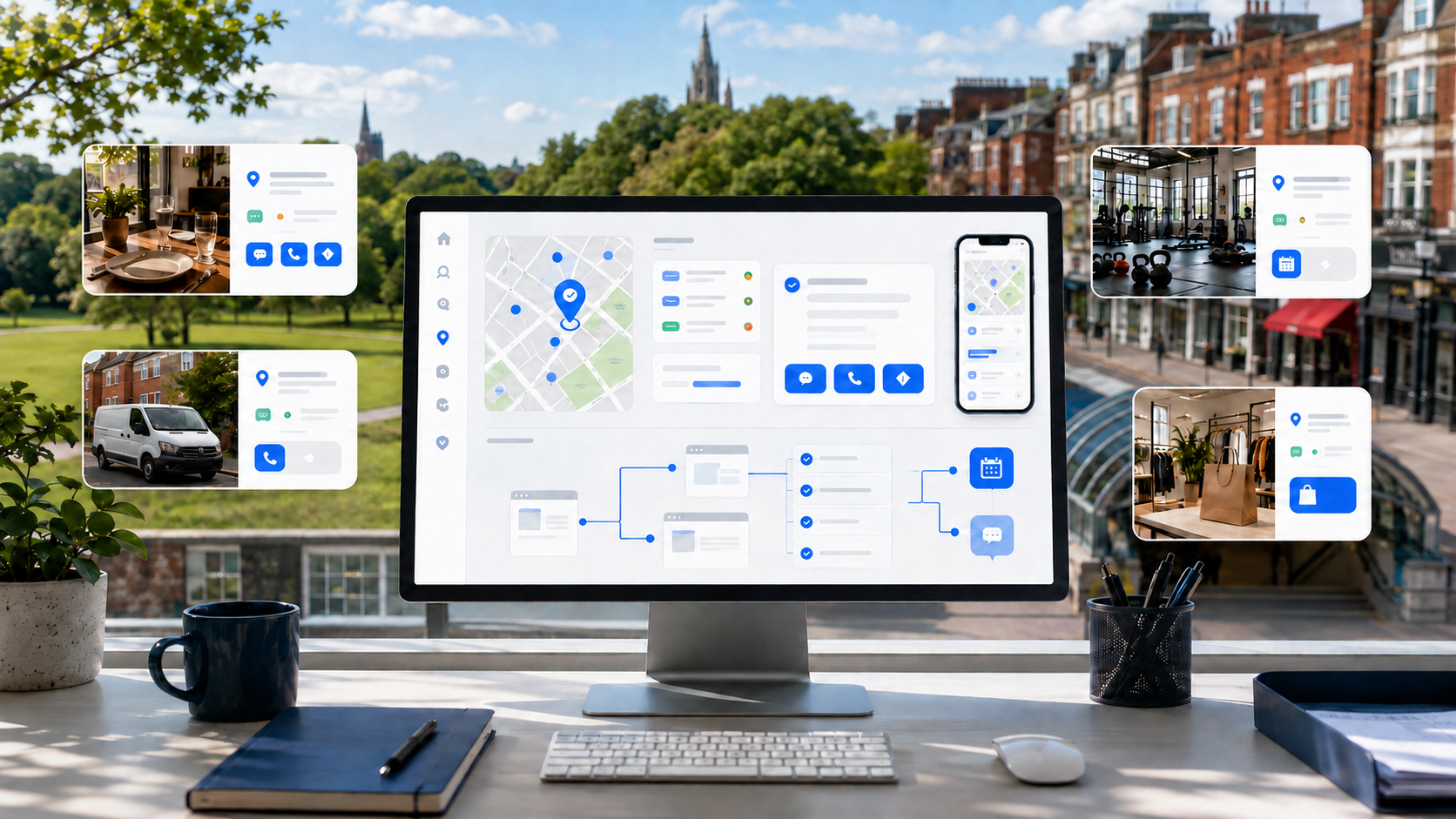
Clapham Local SEO: A Practical Footfall and Enquiry Guide
- Wix Solutions

- 3 days ago
- 8 min read
Updated: Oct 20, 2023
Clapham local SEO should help the right person move from a local search to a useful action: checking today's opening information, finding a route, comparing a service, booking an appointment, calling with a question or visiting a shop. Visibility has little value when the information is inaccurate or the next step fails.
Clapham has an active town centre and Business Improvement District, with a mix of hospitality, retail, leisure, professional and service businesses. Lambeth's recent public-realm work around Clapham High Street also emphasises pedestrian activity and accessible local destinations. This makes mobile discovery and dependable visit information commercially important without justifying generic pages for every nearby street.
This guide covers customer intent, business profiles, local pages, service areas, reviews, citations, technical checks, measurement and responsible AI. It includes four illustrative scenarios. Local SEO can improve clarity and discoverability, but no agency, profile update or content plan can guarantee map placement, rankings, footfall, bookings or revenue.
Plan Clapham Local SEO Around Customer Actions
Define the local action before selecting keywords. A restaurant may prioritise directions and reservations; a clinic may need suitable appointment enquiries; a trades firm may need qualified requests within a real coverage area; a retailer may want visits, collection or local product discovery. Give each action an owner and an operational definition.
Separate discovery measures from business outcomes. Profile views, impressions and website visits show activity, not necessarily a completed visit or suitable lead. Decide how bookings, calls, direction requests, form submissions, collections and accepted enquiries will be recorded, with privacy and attribution limits documented.
Audit the Clapham Local SEO Journey
Search representative service, category and need-based phrases from an appropriate context. Review what a customer sees across map results, organic pages, directories, social profiles and the website. Check business name, category, address or service area, opening information, phone, booking route, photos, reviews and page relevance.
The broader guide to local SEO in London explains how profiles, local content, citation consistency, mobile usability and website structure work together. Use that framework, then adapt it to Clapham's real customer journeys and competition.
Map Local Search Intent
Distinguish visit, service and research needs
A customer searching for a place open now has a different need from someone comparing a long-term professional service. Group queries by action and evidence required. Visit intent may need hours, directions, access and availability. Appointment intent may need suitability, price principles and booking. Service-area intent may need coverage, response conditions and qualification.
Build pages for distinct decisions rather than every keyword variation. One strong service page can address natural synonyms and customer questions. Separate pages are justified when the offer, audience, location, process or evidence changes meaningfully.
Use neighbourhood language carefully
Clapham Common, Clapham High Street, Clapham North and Clapham Old Town can help orient customers when they are genuinely relevant. Do not imply a branch, entrance, service capacity or relationship near a station or landmark that the business cannot verify. Avoid swapping place names into duplicated paragraphs.
Use SEO fundamentals to keep crawling, indexation, page purpose, helpful content and measurement in view. Local terms cannot compensate for a confusing site or an action that does not work.
Maintain an Accurate Business Profile
Choose identity and categories from reality
Use the real public business name and the most specific valid primary category. Add secondary categories only when they represent services actually offered. The address or service-area setting must match how the business operates and receives customers. Do not add keywords to the name or create ineligible locations.
Keep standard hours, special hours, phone, website and booking links current. Where a venue has separate departments or practitioners, follow platform eligibility rules rather than creating profiles to occupy more space. Record who owns the profile and how access is recovered when staff change.
Use photos, services and updates as evidence
Publish current, permissioned images that help someone recognise the venue, product, service or access route. Describe services accurately and remove unavailable offers. Updates can communicate genuine events or changes, but they should not become a substitute for maintained website pages and operating information.
Create Useful Local Website Pages
Connect relevance, evidence and action
A local landing page should identify the business, intended customer, offer, operational location or coverage, evidence and next step. Include practical questions such as access, booking, collection, delivery, consultation or response. Use a clear title, main heading and descriptive internal links.
Put essential facts in accessible page content rather than images alone. Check mobile layouts, tap targets, form labels, contrast, zoom and performance. A search visitor may be walking, travelling or making a quick comparison, so the route to hours, directions, booking and contact should be direct.
Avoid local doorway pages
Do not publish near-identical pages for Abbeville Road, Clapham Common, Stockwell, Battersea and Brixton when one business offer and coverage statement would answer the need. This creates maintenance risk and a poor reader experience. Build a distinct page only where the service, evidence or customer journey is locally specific.
An SEO content strategy can map search intent to service pages, guides and original local evidence. It should reduce duplication and help each URL support a clear decision.
Keep Local Information Consistent
Audit important directories, sector platforms and social profiles for the same core identity and contact information. Correct high-value and customer-facing sources first. Consistency is an operational trust control; it is not an invitation to submit the business to every directory available.
Use named owners and change triggers. A moved entrance, new phone number, revised hours or different booking link should update the website, profile, important citations, paid campaigns and confirmation messages. Keep a simple change log so missed destinations can be found.
Build a Responsible Review Process
Request feedback without pressure
Invite genuine customers to leave honest feedback using a neutral, convenient route. Do not offer incentives that distort sentiment, filter customers by likely rating or ask staff and associates to pose as customers. Never buy reviews or reuse one person's words across different locations.
Respond to praise and criticism in a proportionate tone. Do not disclose booking, health, payment or service details in public. Move complex resolution to an appropriate private channel and record recurring themes for operational improvement.
Turn themes into better pages
Reviews and support questions can reveal missing information about access, waiting, suitability, collection, parking, menus or service limits. Use aggregated themes as research, then verify the operational fact before updating content. Do not manufacture questions or testimonials to fill a gap.
Make Mobile Actions Dependable
Test phone, directions, booking, menu, product and form actions on representative devices. Confirm the destination, prefilled information, validation, consent, receipt and staff hand-off. Avoid intrusive overlays that hide the task or calls to action that compete without a clear priority.
A direction action should use the verified customer entrance where possible. A call button needs the correct operating team. A booking link should show current availability and conditions. If an action depends on a third-party tool, include it in release and maintenance tests.
Support Local Discovery with Technical SEO
Check that important pages are indexable, included in the sitemap and linked from a logical site structure. Use unique titles and descriptions, one clear page purpose, suitable canonicals and useful structured data that matches visible content. Redirect moved URLs to the closest relevant live destination.
Compress images appropriately, limit unnecessary scripts and review Core Web Vitals alongside real mobile usability. Technical improvements help search systems access content and customers use it, but a good score cannot establish local relevance or guarantee a position.
Create Local Content with a Reason
Publish first-hand value
Useful local content might explain a genuine event offer, booking change, collection process, seasonal menu, access route, service constraint or customer decision. It can include original photographs, staff expertise or verified answers. It should remain useful after the location word is removed from the title.
Do not report council, transport or event information without checking the authoritative source and review date. Link or attribute where that helps the reader. If a temporary change affects visits, update the operational page and profile rather than relying only on a blog post.
Connect content to service pages
A guide should help someone take the next sensible step, not compete with the main service page. Use descriptive internal links and avoid several articles targeting the same local phrase. Review cannibalisation when a new location, service or campaign page launches.
Measure Visits, Bookings and Enquiries
Track profile actions, landing-page engagement, direction requests, call clicks, booking starts, completions, form delivery, accepted enquiries and offline outcomes where evidence exists. Use call or campaign tracking carefully so the public phone information remains consistent and privacy obligations are met.
Combine profile and search data with website analytics and operational records. Annotate events, promotions, closures, public-realm changes and tracking releases before assigning cause. A busy weekend does not by itself prove that an SEO change created footfall.
Four Illustrative Clapham Journeys
Practical Example 1: A restaurant
A restaurant keeps special hours, menu, dietary enquiry, access and reservation links aligned across its profile and website. Mobile visitors can move directly from discovery to a verified booking journey. Staff record reservation source cautiously and review repeated pre-visit questions before changing content.
Practical Example 2: A fitness studio
A studio maps searches to class types, suitability and timetable actions rather than publishing a page for every nearby road. Practitioner or department profiles follow eligibility rules. The website explains first-visit expectations, access and cancellation before a customer books.
Practical Example 3: A trades business
A trades firm uses an honest service-area profile and pages for distinct high-value services. Coverage and response expectations are explicit. Enquiry forms capture need and postcode without implying emergency availability, while staff record which requests are accepted, unsuitable or outside the area.
Practical Example 4: An independent retailer
A retailer aligns product discovery with current opening, collection, returns and event information. Permissioned shop and product images help customers recognise the offer. Click-and-collect actions are tested, and staff compare profile activity with fulfilled collections rather than reporting every view as a sale.
Responsible AI for Clapham Local Search
AI tools can cluster anonymised search queries, organise citation audits, draft content briefs, identify inconsistent business information and summarise recurring review themes for investigation. They can suggest test cases for mobile actions or profile-to-website journeys. Human review must confirm every fact and priority.
Do not fabricate a Clapham address, branch, service area, customer, review, award, event, parking claim, opening time or local relationship. Do not upload customer messages, booking details, medical information, account credentials or unpublished business data to an unapproved system. Check licences and permissions for reused sources.
Generated replies, schema, pages and automations need editorial and technical approval. AI cannot verify that a door is open, a service is staffed or a booking was delivered. Human owners remain accountable for accuracy, privacy, security, accessibility and every promise made in local search.
A Practical 90-Day Plan
In the first month, verify identity, ownership, categories, hours, actions and priority citations. In the second, improve one local landing journey, mobile action and review process. In the third, publish one original piece of decision-support content, test technical settings and compare activity with accepted business outcomes.
Keep a baseline, release log and backlog. Fix wrong customer information immediately. Test important actions after staff, supplier or campaign changes. Expand only when the first journey is accurate, useful and measurable.
Choose Suitable Local SEO Support
A useful partner should ask about eligibility, service boundaries, customer actions, profile ownership, evidence and internal follow-up before proposing keywords or pages. They should explain uncertainty and avoid guarantees about map packs, rankings, calls, footfall or revenue.
Explore Wix Solutions' SEO, website and content services to scope work around the current local journey. The right starting point may be profile accuracy, website structure, content, measurement or an operational hand-off.
Conclusion
Effective local SEO connects accurate discovery with a dependable real-world action. For Clapham businesses, that means truthful profiles, useful pages, mobile-first journeys, responsible reviews and evidence from visits, bookings or accepted enquiries. Build the system around customers, not a collection of location keywords.
If you want to review a Clapham local journey on Wix, contact Wix Solutions with the priority action, public location or service area, profile access and current measurement baseline.


