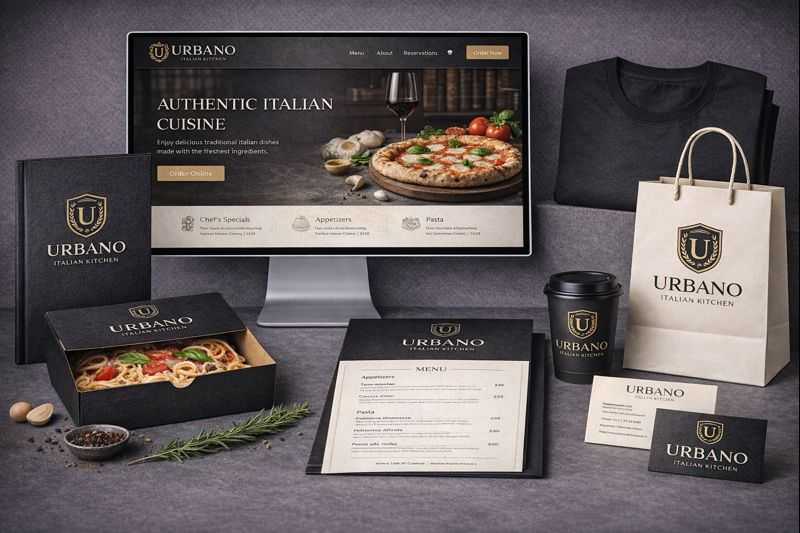
Example Project: Sara Restaurant Branding - Full Branding and Visual Identity Strategy for a Local Restaurant
Sara Restaurant Branding is an example of how a local restaurant can be developed into a more recognisable, commercially attractive and professionally presented business through a structured branding process. This example project shows the kind of strategic thinking, design planning and practical rollout that Wix Solutions would recommend for a restaurant operating in a local market and wanting to improve both image and business performance.
This is not only about making a restaurant look nicer. It is about building a stronger public identity that helps the business communicate clearly, attract the right customers, improve trust and create consistency across every place where the customer interacts with the brand.
For a local restaurant, branding is often underestimated. Many owners focus on food, service, interior and day-to-day operations, while the public image of the business evolves in a fragmented way. Menus may look different from social media. The website may not match the in-house atmosphere. Printed materials may feel generic. The logo may not be strong enough to carry the restaurant’s identity across different formats. Over time, this creates a business that may function well operationally, but does not fully express its value to the local market.
The purpose of the Sara Restaurant Branding project is to solve that problem through a joined-up, professional process.
The goal is to build a local restaurant brand that feels complete, memorable and commercially useful. This includes visual identity, messaging direction, digital presentation, guest-facing materials and the foundations for stronger local visibility.
1. Project Background and Business Context
Sara Restaurant is imagined here as a local restaurant serving a defined community, with regular residents, nearby workers, families, occasional visitors and returning customers forming the core audience. Like many local restaurants, it likely competes not only on food quality, but on trust, familiarity, convenience, atmosphere and perceived value.
A local restaurant does not need to be a luxury brand in order to benefit from strong branding. In many cases, local businesses need clear visual communication even more than larger chains because they cannot rely on national recognition, big media budgets or already-established awareness. Their identity must work harder at local level.
For Sara Restaurant, the starting point of the project would be to understand the current business situation. Before any design work begins, it is important to assess:
what type of food and dining experience the restaurant offers
who the typical customer is
whether the restaurant is positioned as casual, family-focused, modern, traditional or hybrid
what existing visual materials already exist
whether the restaurant currently has a logo, website, social media presence or printed assets
whether the public image matches the actual dining experience
what the owner wants to improve most urgently
what the longer-term business ambition is
This stage matters because branding should not be created in isolation from the business itself. A restaurant’s identity must support the way the business actually works.
For example, a family-focused neighbourhood restaurant needs a different visual strategy from a trend-led brunch venue or a premium evening dining concept. Even if all three are local restaurants, the tone, colours, typography, photography and style of communication would need to be different.
Sara Restaurant Branding would therefore begin with diagnosis, not decoration.
2. Main Project Objective
The central objective of the Sara Restaurant Branding project would be to transform the restaurant from a potentially inconsistent local business into a more unified brand with a clear public face.
This means creating a system that helps the restaurant:
present itself more professionally
become easier to recognise
strengthen local trust
improve consistency across online and offline materials
support more effective marketing
make the restaurant feel more intentional and established
create better alignment between food, atmosphere and communication
A secondary objective would be to support future business growth. Even if the restaurant is currently focused on local trade, a stronger brand creates practical advantages for future expansion. It becomes easier to add:
online reservations
special event promotions
takeaway offers
loyalty systems
seasonal campaigns
gift vouchers
stronger social media marketing
local SEO support
improved Google presence
catering or private bookings
When the brand is built properly, future business development becomes easier because the restaurant is no longer improvising its public image every time something new is added.
3. Recommended Branding Strategy
For Sara Restaurant, I would recommend a branding strategy built around four main pillars:
A. Identity Clarity
The restaurant must have a defined personality. It should be clear whether it is warm and family-oriented, modern and urban, rustic and traditional, or stylish and contemporary. Without clarity, the brand becomes visually mixed and harder to remember.
B. Guest Trust
Everything about the visual identity should help customers feel comfortable and confident. A local restaurant thrives when people feel safe returning, recommending it and using it for regular dining.
C. Local Recognition
The branding should help the restaurant stand out within its local area. This does not mean being loud or overly trendy. It means being recognisable, consistent and distinctive enough to stay in people’s minds.
D. Practical Use Across Touchpoints
The brand needs to work in real restaurant life. It should function not only on a logo file, but on menus, a website, social posts, takeaway materials, signage and other customer-facing formats.
These four pillars would guide the whole project.
4. Discovery and Research Phase
The first practical stage of the project would be a discovery phase. This is where the foundations are built. I would recommend beginning with a structured research process covering the following areas.
Brand Audit
This would involve reviewing all current customer-facing materials used by Sara Restaurant, including:
existing logo
current menus
takeaway leaflets
social media profiles
Google Business presence
current website, if one exists
printed items in the restaurant
signage and any visible in-house materials
The purpose is to see where the brand is currently inconsistent, weak or underdeveloped.
Competitor Review
A local restaurant never operates in a vacuum. It competes with nearby restaurants, takeaways, cafés and food venues that are also trying to attract local attention. A competitor review would help identify:
how similar businesses present themselves
what kinds of visuals dominate the local market
where Sara Restaurant can create more distinction
what common clichés should be avoided
Customer Profile Review
The next step would be to identify the primary customer types. A local restaurant often serves several groups at once, but usually one or two are commercially most important. For example:
local families
couples
workers at lunchtime
takeaway customers
loyal repeat diners
occasional special-occasion guests
Each of these audiences responds differently to visual cues. Understanding the likely customer base helps shape the correct tone.
Restaurant Atmosphere Review
A restaurant’s physical atmosphere must be considered as part of branding. If Sara Restaurant has a cosy, warm and welcoming interior, the brand should support that. If it is cleaner and more contemporary, the visual language should move in that direction instead.
At this stage, the aim is not yet to design. It is to understand.
5. Brand Positioning Recommendation
Once discovery is complete, I would recommend defining the brand positioning for Sara Restaurant. This is one of the most important steps because it determines how the restaurant will be perceived.
For a local restaurant like Sara Restaurant, I would most likely recommend a positioning direction centred on:
welcoming quality with a recognisable local identity
This is a valuable middle ground for many local dining businesses because it allows the restaurant to feel warm and accessible without looking cheap, and professional without feeling distant.
The positioning should communicate:
a restaurant that is approachable
a place people can trust regularly
an environment that feels cared for
food and service that appear dependable and attractive
a local business with personality and consistency
This type of positioning is often stronger than trying to look overly luxury or overly casual unless the concept truly requires that.
Once this positioning is agreed, it becomes the filter through which all design decisions are made.
6. Verbal Direction and Brand Tone
A visual identity is stronger when it is supported by a clear verbal style. Sara Restaurant would benefit from a consistent tone of communication, especially if the business wants to improve website quality, menu language and social media clarity.
I would recommend that the restaurant use a tone that feels:
warm
confident
simple
appetising
local
welcoming
not overly formal
not too generic
This tone should carry through to:
website copy
menu headings
social media captions
promotional messages
guest-facing notices
special event announcements
When the words and visuals work together, the restaurant begins to feel more like one coherent business rather than a collection of separate materials.
7. Visual Identity Development
This is the stage where the strategic work begins to turn into design.
For Sara Restaurant, I would recommend creating a visual identity system rather than only a logo. A visual identity system gives the restaurant a flexible and consistent toolkit that can be used across all formats.
Logo Direction
The logo should be readable, adaptable and rooted in the restaurant’s actual personality. For a local restaurant, the logo should not be too complicated or overly abstract. It should work clearly on:
menu covers
website header
social media profile image
printed materials
window stickers
signage
takeaway packaging
The goal is not to produce something flashy. The goal is to create something stable and recognisable.
Colour Palette
The colour palette should reflect the dining atmosphere and help trigger appropriate emotional cues. Depending on Sara Restaurant’s concept, this could include warm neutrals, richer food-inspired tones, classic dining colours or a softer natural combination that feels welcoming and timeless.
The colour palette must work both in print and digitally.
Typography
Typography is especially important for restaurants because it shapes how menus, websites and promotional materials feel. I would recommend a type system with:
one stronger brand font for headings
one clean, readable font for body text
careful hierarchy rules for menus and page structures
Typography should support readability first, atmosphere second.
Supporting Graphics
If appropriate, I would also recommend simple supporting graphic elements such as line motifs, menu dividers, icons or decorative accents. These should be subtle and functional, not overly ornamental.
The visual identity should feel polished without becoming visually heavy.
8. Menu Design Strategy
For Sara Restaurant, menu design would be a major part of the project rather than a later add-on. The menu is one of the most business-critical brand tools in any restaurant.
I would recommend a menu design strategy that focuses on:
readability
appetite appeal
consistency with the restaurant brand
clear categorisation
easier customer decisions
support for upselling and specials
A badly structured menu can create friction, confusion or an unprofessional feeling. A good menu can shape the guest experience positively from the start.
Menu design work would likely include:
menu hierarchy planning
category structure
item spacing
visual rhythm
drinks and specials treatment
takeaway and dine-in adaptation
print-ready design system
The final menu should feel like an extension of the restaurant experience, not just a price list.
9. Website Recommendation
A local restaurant like Sara Restaurant would benefit significantly from a professional website, even if many customers still discover the business through maps or word of mouth.
I would recommend a website designed around practical customer decisions. The site should answer quickly:
what kind of restaurant this is
what food it serves
where it is located
when it is open
how to book or enquire
whether takeaway is available
what the atmosphere looks like
The website should be visually aligned with the new brand and be mobile-friendly, because many restaurant decisions are made on phones.
Recommended pages may include:
Home
About / Our Story
Menu
Gallery
Reservations or Contact
Events or Private Dining if relevant
Takeaway if relevant
The homepage should do a lot of the trust-building work immediately through clear structure, strong imagery and concise messaging.
10. Google Presence and Local Visibility
For a local restaurant, one of the most commercially useful parts of branding is making sure the restaurant is not only attractive, but easy to find and easy to trust locally.
I would recommend that the branding project also consider the restaurant’s local digital footprint, including:
Google Business Profile image consistency
proper branding in profile visuals
aligned descriptions
strong links to website and booking
improved consistency of contact information
better presentation of the menu and guest experience
In addition, website structure should support local discoverability through service wording, location clarity and page organisation.
For a local restaurant, visibility and image should never be separated. They support one another.
11. In-Restaurant Branding Rollout
One of the strengths of a full branding project is that it can influence not only the online image but also the in-person experience.
For Sara Restaurant, I would recommend reviewing the following touchpoints:
printed menus
takeaway flyers
table signage
reservation cards
loyalty or stamp cards if used
staff-facing printed materials
window stickers
door opening-time displays
promotional posters
gift voucher presentation
These are small items individually, but together they help create the overall impression of professionalism and care.
A guest notices more than owners often think. When all these materials feel aligned, the restaurant appears more established and better run.
12. Social Media Visual Direction
For a local restaurant, social media is often an ongoing customer touchpoint. However, many restaurants post without a consistent visual direction, which weakens recognition.
For Sara Restaurant, I would recommend building a simple but usable social media system, including:
post cover style
template direction for offers or special nights
story background style
consistent typography usage
colour discipline
food photography guidance
event promotion format
This does not need to make the content feel rigid. It simply makes the business easier to recognise and more coherent over time.
13. Photography and Image Direction
Restaurant branding is heavily affected by imagery. For Sara Restaurant, I would recommend a clear photo direction, even if professional photography is done later.
The brand should guide what images should feel like. For example:
warm and inviting
natural and appetising
not over-edited
consistent in lighting feel
people-focused or food-focused depending on concept
close enough to create appetite and atmosphere
Photography should support the restaurant’s real personality, not create a false one.
14. Suggested Project Phasing
To make the project manageable, I would recommend delivering Sara Restaurant Branding in phases.
Phase 1: Discovery and Strategy
research and audit
positioning recommendation
tone of voice direction
project roadmap
Phase 2: Core Brand Identity
logo development
colour palette
typography
brand style direction
Phase 3: Key Guest-Facing Materials
menu design
basic print assets
social media visual direction
Phase 4: Website and Digital Touchpoints
website design
content layout
contact and booking flow
local presentation refinement
Phase 5: Rollout and Consistency
in-restaurant materials
digital consistency review
future-use brand guidance
This phased approach is useful because it prevents the work from becoming chaotic. It also helps the restaurant owner prioritise what matters most first.
15. Expected Outcome of the Project
If the Sara Restaurant Branding project is executed well, the expected result would be a local restaurant that feels significantly stronger and more professionally presented.
The business should emerge with:
a recognisable visual identity
clearer customer-facing communication
more polished printed materials
a better website presence
improved consistency across all touchpoints
stronger local trust
a better foundation for future marketing and growth
This is not only aesthetic value. It is business value. The restaurant becomes easier to promote, easier to remember and easier for customers to choose.
16. Why This Type of Project Is Worth Doing
A local restaurant often depends on repeat trade, local reputation and fast first impressions. Strong branding supports all three. It helps turn a restaurant from “just another local place” into a more defined and memorable business.
For owners, this can lead to better confidence in how the restaurant is presented. For customers, it leads to clearer recognition and trust. For future marketing, it gives the business a much stronger base.
That is why I would recommend a structured, full branding process for Sara Restaurant instead of only making isolated design changes.
When branding is done properly, the restaurant feels better not just visually, but commercially and operationally.
17. Final Recommendation
My full recommendation for Sara Restaurant would be:
Do not approach branding as a single graphic task. Treat it as a complete business presentation project.
Start with discovery. Define the restaurant’s position clearly. Build a visual identity system, not just a logo. Redesign the menu as a strategic brand tool. Create a website that supports real customer behaviour. Align local visibility with image. Extend the brand into physical touchpoints. Give social media a visual framework. Keep everything simple, warm, functional and consistent.
That is the process most likely to help a local restaurant build a stronger, more reliable and more commercially effective public identity.
Sara Restaurant Branding, approached in this way, becomes more than design work. It becomes the structured creation of a restaurant image that can support trust, recognition and growth over time.
FAQ
What is included in the Sara Restaurant Branding example project?
The Sara Restaurant Branding example project shows a complete strategic approach to building a stronger local restaurant brand. It includes brand discovery, positioning, visual identity direction, logo thinking, menu design structure, website planning, local visibility support and guest-facing branded materials. The purpose is to demonstrate how a restaurant can move from a fragmented public image to a more professional and memorable identity.
Why is a full branding process important for a local restaurant?
A full branding process is important because a local restaurant is judged on much more than food alone. Customers notice the menu design, website quality, social media appearance, printed materials and general atmosphere before deciding whether to trust the business. When these elements are inconsistent, the restaurant may feel weaker than it really is. A full branding process helps create one clear identity that supports trust, recognition and stronger commercial presentation.
How can branding improve the business performance of a restaurant like Sara Restaurant?
Branding can improve business performance by helping the restaurant look more established, more appealing and easier to remember. A stronger visual identity can improve first impressions, while better menu design and website structure can support customer decisions more effectively. Consistent branding also helps local marketing work better, strengthens customer trust and gives the restaurant a more solid foundation for future growth, promotions and repeat business.