Online Brand Presence: How to Maximise Visibility and Trust

An online brand presence is the combined impression a business creates wherever people encounter it digitally. Search results, the website, social profiles, reviews, articles, videos, directory listings, email and third-party mentions all contribute. The objective is not to appear everywhere. It is to make the most relevant touchpoints clear, consistent and useful enough that customers can recognise the business, trust it and take the next step.
Visibility without credibility produces weak results, while a beautiful website with no discoverability can remain invisible. A stronger strategy connects both. Wix Solutions treats branding, content, SEO, website design and digital marketing as parts of one system so each channel reinforces the same business proposition.

Build an Online Brand Presence Around the Customer Journey
Think about the questions a potential customer asks in sequence. What options exist? Which provider looks relevant? Can I trust this business? Does it solve my specific problem? What proof is available? What should I do next? Different digital touchpoints can answer different parts of that journey, but they should lead towards a coherent experience.
Online Brand Presence Example: A Local Service Business
A local service company may be discovered through search, a map listing, a recommendation or social content. Its website should then confirm service areas, explain the work, show credible examples and make contact easy on mobile. Reviews and consistent business information strengthen trust. The goal is not to chase every channel equally; it is to make the most common discovery routes lead to the same clear proposition.
Create a Website That Deserves the Attention You Generate
The website is usually the place where scattered online attention becomes a structured business experience. It should explain the offer clearly, establish credibility and give visitors a logical route through services, products, proof and contact. The principles in professional web design are central here: responsive UX, useful content, performance, accessibility and maintainability all shape the impression of the brand.
Build service and product pages around genuine customer decisions. Avoid vague claims such as 'high quality' unless the page also explains what quality means in practical terms. Use process information, qualifications, case studies, examples, guarantees where appropriate and clear expectations to turn brand language into evidence.
Use Search Visibility to Meet Existing Demand
Search can connect a business with people who are already looking for information, a service or a product. Start with the language customers actually use, then create pages that answer the intent behind those searches. A clear Wix SEO foundation includes sensible page topics, headings, titles, descriptions, internal links and image information, supported by content that is genuinely relevant.
Do not treat rankings as an isolated goal. A page that attracts the wrong audience or fails to answer the next question creates visibility without value. Connect SEO work with the same positioning and conversion journey used elsewhere in the brand.
Keep Brand Identity Consistent Across Channels
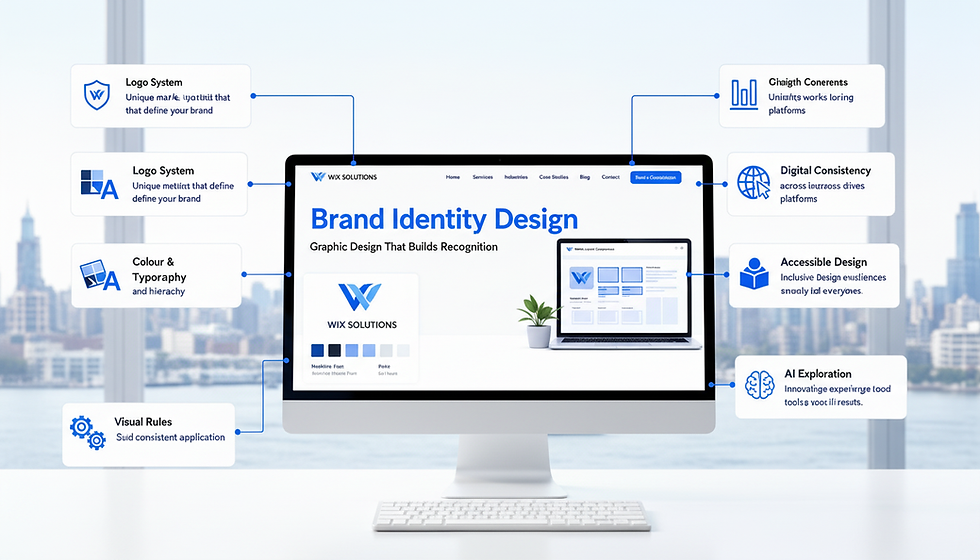
Visual consistency helps people connect separate encounters with the same organisation. The logo, typography, colours, imagery and layout language should adapt to different formats without becoming a different brand. The brand identity design system should therefore be practical enough for websites, social posts, presentations, email and campaigns rather than existing only as a static logo file.
Message consistency matters just as much. If social content positions the business as specialist and premium while the website uses generic bargain language, the customer receives conflicting signals. Define core messages and evidence points that can be adapted without changing the underlying promise.
Publish Content That Builds Authority, Not Volume
Useful content demonstrates how the business thinks. Answer recurring questions, explain trade-offs, show processes, compare options and turn real customer problems into practical guidance. A smaller library of strong resources can be more valuable than frequent thin articles because each piece can support search, sales conversations, social content and internal linking.
Social channels can then distribute and reframe that expertise. The guide to building a cohesive social media presence explains how channel roles, content themes and website destinations can work together instead of creating disconnected activity.
Four Practical Online Presence Examples
Example 1: Local Service Company
Build location-relevant service pages, keep contact and business information consistent, show recent work and reviews, and use social content to demonstrate process and answer common questions. Every route should lead towards a clear enquiry action.
Example 2: B2B Consultancy
Use thought-leadership articles, clear service pages, sector examples and case-study evidence. LinkedIn or another appropriate professional channel can distribute insights, while the website holds the deeper material prospects need for comparison and internal approval.
Example 3: E-Commerce Brand
Combine category and product search visibility with recognisable campaign creative, customer proof and useful product education. Social posts should lead directly to relevant products or collections, while the store experience maintains the same visual and verbal promise through checkout.
Example 4: Growing Multi-Location Business
Create a scalable structure for locations while keeping the core brand consistent. Each location can have genuinely useful local information, proof and contact details without duplicating thin content. Central brand rules and content templates help expansion remain recognisable.
Use AI to Increase Efficiency Without Inventing Authority
AI tools can support research organisation, topic clustering, first-draft outlines and repurposing. A team can take an approved long-form article and use an AI assistant to suggest social angles, email summaries or FAQ candidates. Analytics assistants can also help organise performance data and identify recurring questions across search, support and content interactions.
The source of authority should remain real business knowledge. Check facts, examples, claims and tone before publishing. Do not create fake testimonials, invented case studies or synthetic expertise simply to fill content gaps. AI is most useful when it helps a team reuse accurate source material more efficiently while human judgement controls what represents the brand.
Measure Visibility, Trust and Action Together
Monitor signals that show how people move through the ecosystem: relevant search impressions, qualified website visits, engagement with key pages, branded searches, enquiries, bookings, product interactions and conversions. Social reach can provide context, but it should not be mistaken for business impact on its own.
Use the data to decide what to strengthen. If a topic attracts attention but produces weak website engagement, improve the destination. If customers repeatedly ask a question, create clearer content. If social content drives strong qualified traffic, develop the theme further through a coordinated social media marketing and website plan.
A Strong Online Brand Presence Is a Connected System
The strongest online brands do not rely on one platform or one campaign. They build recognition through consistent identity, earn discovery through useful search and content, establish confidence on the website and maintain relationships through appropriate channels. Each part makes the next part more effective.
Explore Wix Solutions services if your website, branding, SEO and content need to work as one clearer digital presence rather than separate activities.