Start-up Branding: A Practical Guide for New Businesses

Launching a new business creates a long list of urgent decisions: what to sell, who to serve, how to price the offer and where to find the first customers. Branding can easily be reduced to a quick logo task at the end of that list. That is a mistake. A logo is useful, but it cannot explain the whole business. Your brand is the joined-up system that helps people recognise you, understand your value and decide whether the experience feels credible.
Effective start-up branding gives a young business clarity before it has years of reputation behind it. It turns the founder’s reasoning into a consistent promise, voice, visual identity and customer experience. When those elements agree, every touchpoint—from a social profile to a proposal or website—feels as though it comes from the same organisation. That consistency makes the business easier to remember and easier for a small team to manage.

The aim is not to imitate an established company or to make an untested idea look larger than it is. The aim is to communicate honestly, confidently and consistently. This guide shows how to build a practical brand system, test it against real customer journeys and improve it as the business learns. It also explains where artificial intelligence can accelerate early thinking without replacing human judgement.
What Start-up Branding Needs to Achieve
Before choosing colours or typefaces, decide what the brand must do. A useful brand should identify the right audience, frame the problem you solve, express a believable promise and create an appropriate emotional tone. It should also help the team make repeatable decisions. If every Instagram graphic, sales email and landing page needs a fresh debate, the system is not yet clear enough.
A new business rarely needs a huge brand manual. It does need a small set of decisions that fit together. A concise positioning statement, three or four message pillars, a defined voice, a flexible visual system and basic usage rules are usually more valuable than dozens of decorative assets. These foundations should be specific enough to guide work but flexible enough to survive learning after launch.
Positioning Before Decoration
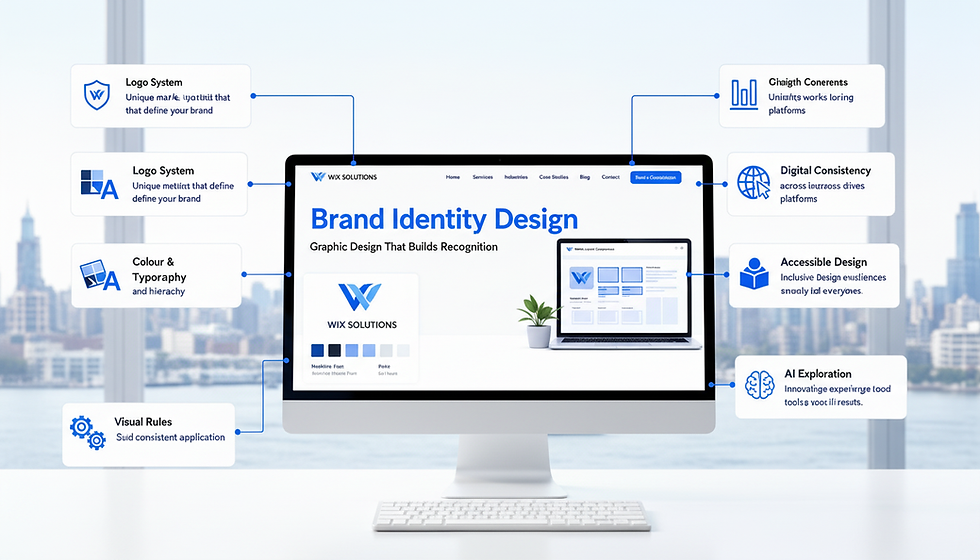
Positioning answers why a particular customer should consider you instead of another route. It is not a slogan and it should not rely on vague claims such as “high quality” or “customer focused”. Name the audience, the situation they face, the outcome you help create and the reason your approach is credible. The brand identity design guide explains how that strategic core can be translated into recognisable design choices.
Write the positioning in plain language before polishing it. Then test it in three places: a ten-second spoken introduction, the top section of a website and the opening of a proposal. If the message changes completely in each setting, return to the core idea. A stable position can be expressed at different lengths without becoming a different promise.
Define Audience, Promise and Personality
“Everyone” is not a useful starting audience. Choose the group whose need, buying context and expectations you understand best. Describe what they are trying to achieve, what makes them hesitate and what evidence would reduce that hesitation. This is not about inventing a fictional persona with irrelevant details; it is about identifying the decisions the brand must support.
Next, define a promise the business can actually keep. A start-up may promise a clear process, specialist attention, transparent communication or a carefully chosen product range. Personality then shapes how that promise sounds and looks. Select a few traits with practical opposites—for instance, expert but not distant, energetic but not chaotic, premium but not showy. These boundaries make the personality usable.
Core Elements of a Brand System
Name, Message and Voice
A good name should be distinctive enough to identify the business, simple enough to share and suitable for the markets in which it will be used. Check relevant company names, domains, social handles and trade marks before committing money to design or print. Those checks reduce avoidable confusion, but they are not a substitute for professional legal advice where rights or risk are material.
Build a message hierarchy beneath the name. Start with one clear description of what the company does, then define the main customer benefit, the supporting reasons to believe and the action you want a reader to take. Voice guidelines should show how the business speaks in real situations: a homepage headline, a helpful reply, a quotation and a complaint response. Concrete examples are more useful than a list of adjectives.
Visual Identity as a Working System
Visual identity includes the logo, colour palette, type hierarchy, imagery, icon style, spacing and layout behaviour. Each element should support the position rather than follow a trend without purpose. A branding and visual identity service can help turn the strategy into a coherent, adaptable system when the business needs professional design support.
Design for the places the brand will really appear. A detailed logo may look impressive on a presentation board yet fail as a small profile image. Pale colours may disappear on mobile screens. A single horizontal lock-up may not fit packaging, invoices or social posts. Prepare primary and compact logo versions, accessible colour combinations, dependable type sizes and a small library of repeatable layouts.
Website and Customer Journey
The website is where messaging, visuals and customer action meet. Professional Wix website design should make the offer understandable, establish relevant trust and move visitors towards the next sensible step. The navigation, page order, calls to action, forms and confirmation messages are all part of the brand experience, not merely technical details.
Map the journey from first impression to enquiry or purchase. Ask what a visitor needs to know at each stage, what doubt might stop them and what evidence can help. Keep the wording, imagery and behaviour consistent across desktop and mobile. A polished homepage cannot compensate for an unclear service page, a confusing form or a follow-up email that sounds like a different company.
Four Practical Start-up Branding Examples
The following four scenarios are illustrative. They show how the same framework can produce different decisions when the audience, promise and buying context change. They do not depend on invented performance claims; each one focuses on choices a real founder could test.
Start-up Branding Example 1: A Local Service Business
Consider a new home-maintenance company serving a defined local area. Its customers may be less interested in an adventurous visual style than in punctuality, care and clear communication. The position could centre on dependable scheduling and respectful work in occupied homes. The brand voice would be calm and direct, while photographs would show tidy processes, identifiable team members and completed details rather than generic stock images.
The website would make service coverage, typical job types and the enquiry process easy to find. A restrained palette, legible typography and consistent quotation templates would reinforce order. The founder could test the system by asking whether a vehicle graphic, appointment message and mobile service page all signal the same promise. Consistency here is operational evidence, not decoration.
Example 2: A B2B Consultant
A specialist consultant needs to make expertise tangible without hiding behind jargon. The audience may be directors who want a structured decision process rather than a broad list of capabilities. The brand could organise the offer around a named framework, define the problems it is suited to and state where it is not the right fit. A measured, precise voice would support that positioning.
Visual design could use diagrams, generous spacing and a disciplined document system. Case material should explain context, method and learning without exposing confidential information or promising identical results. On the website, the journey might move from a clear problem statement to the consultant’s approach, suitable engagements and a focused discovery call. Every element reduces uncertainty around an intangible service.
Example 3: An Online Jewellery Start-up
An online jewellery brand sells both an object and an experience. Its positioning might focus on small-batch pieces for customers who value thoughtful materials and everyday wear. The visual system needs to let the products lead: consistent lighting, accurate colour, a clear scale reference and layouts that work from product pages to packaging inserts. The voice can be warm and descriptive without making unsupported claims about materials or sourcing.
The customer journey should connect discovery, product comparison, delivery information, care guidance and post-purchase communication. Packaging, order emails and social content should feel related to the shop without becoming identical. A founder can begin with a compact set of art-direction rules and expand it as the range grows, preserving recognition while giving each collection room to breathe.
Example 4: A Neighbourhood Fitness Studio
A neighbourhood fitness studio may need to welcome beginners while still communicating professional coaching. Its promise could emphasise structured support and an inclusive starting point, rather than dramatic transformation. Photography should show realistic participation, clear spaces and coaches at work. The tone can be encouraging and specific, avoiding pressure, shame or guarantees about individual outcomes.
The site should make class formats, accessibility information, timetables, pricing and first-visit expectations easy to understand. Booking confirmations and arrival instructions should continue the supportive voice. The brand system succeeds when someone can move from a local search result to a booked introductory session without encountering conflicting language, hidden practical details or an intimidating change in tone.
How AI Tools Can Support Start-up Branding
Useful Tasks for AI-assisted Planning
Artificial intelligence can speed up low-risk exploratory work. It can group research notes into themes, propose alternative ways to describe an offer, generate questions for customer interviews and turn approved voice rules into practice exercises. It can also help a founder compare content structures, build a first checklist or create a broad range of mood-board directions for discussion. These outputs are starting material, not finished strategy.
Give an AI tool a defined task and evaluation criteria rather than asking it to “make a brand”. State the audience, business model, constraints and desired decision. Request several distinct routes and ask what assumptions each route makes. Keep confidential customer information, private commercial data and unpublished intellectual property out of general-purpose tools unless the organisation has an approved, secure arrangement for that use.
AI can also support consistency after the decisions are approved. A team might use it to check whether a draft follows the voice guide, suggest shorter versions of a confirmed message or create an internal template for routine content. A person should review every public output for accuracy, tone, inclusion and context. Speed is useful only when it does not weaken trust.
Where Human Judgement Must Lead
Founders and qualified specialists must own the choices that shape the business. Human judgement is essential when interpreting customer evidence, judging cultural meaning, evaluating originality, checking accessibility and balancing commercial priorities. Name and trade mark clearance, legal claims, regulated language and contractual promises need appropriate professional review rather than an automated guess.
People also decide what the brand should refuse to become. An AI system can produce familiar patterns very quickly, which creates a risk of a generic identity that resembles the category but says little about the company. Use technology to widen the exploration, then make deliberate choices grounded in the business. Record why the final route fits so future team members can apply it intelligently.
A Practical Brand Checklist Before Launch
Build a Minimum Viable Brand System
Before launch, confirm that the team can answer seven questions: Who is the priority audience? What problem or ambition brings them to the business? What is the offer? What is the believable promise? What evidence supports it? How should the brand sound? What should the customer do next? If the answers are unclear, adding more design assets will not solve the underlying problem.
Then prepare the smallest useful toolkit: approved logo versions, colour and type rules, image direction, a one-page message hierarchy, voice examples, core website components and templates for the most frequent documents or posts. Give every asset a clear file name and owner. Include rules for what not to do, because boundaries prevent accidental variation more effectively than inspiration alone.
Test Consistency and Accessibility
Run the system through real tasks before making it public. Create a mobile homepage section, a social profile, an email reply, a quotation and a simple printed item. View them together and check whether the same organisation is recognisable without forcing every item into one layout. Ask people unfamiliar with the project what they think the business offers, who it serves and what action feels obvious.
Check colour contrast, text size, link clarity, image descriptions, keyboard-friendly journeys and plain-language instructions. Accessibility is part of brand quality because it determines who can understand and use the experience. Correct weaknesses in the system itself, then update the templates. This is more reliable than asking each future designer or writer to repair the same problem independently.
When to Ask for Professional Support
A founder can make many early decisions independently, especially with a focused offer and a small number of touchpoints. Professional help becomes valuable when the position remains unclear, several audiences compete for attention, the identity must work across complex formats or the website needs a coherent commercial journey. Review the full range of website, branding and growth services to identify the level of support that fits the current stage.
A useful partner should ask about the business before presenting a look. They should explain the reasoning behind recommendations, prepare assets your team can operate and distinguish strategic advice from personal taste. If you would like to discuss the brief, priorities and practical next steps, contact Wix Solutions with the context you already have. A clear starting conversation is more valuable than pretending every decision is settled.
Build a Brand the Business Can Operate
Strong start-up branding is not a one-off reveal. It is a decision system that helps a young company communicate clearly while it learns. Begin with positioning, connect the message and visual identity, design the customer journey and test the result in ordinary tasks. The guide to building an online brand presence can help extend that consistency across the wider digital experience.
Review the brand when the offer, audience or evidence changes—not whenever a new trend appears. Keep the core recognisable, document deliberate improvements and retire assets that no longer represent the business. Over time, this discipline supports the principles described in how strong branding builds long-term success. The result is a credible brand that customers can understand and a practical system that the team can use.